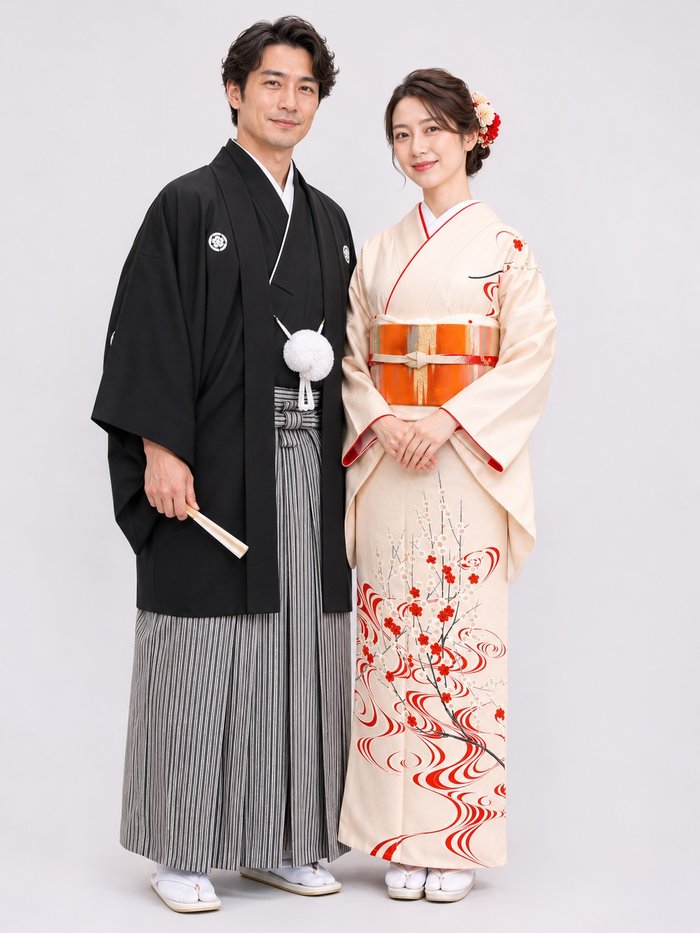
Start the new year the Japanese way: with hatsumode, the first shrine visit of the year — in a kimono.
HARAJUKU KIMONO HOUSE is a kimono rental and dressing shop about a 12-minute walk from Meiji Shrine (Meiji Jingu). We dress you, style your hair, and you walk straight to the shrine in kimono.
What Is Hatsumode?
In the first days of January, people across Japan visit a shrine or temple to pray for good health and happiness in the coming year. Meiji Shrine is one of the most visited shrines in Japan at New Year, and seeing the crowds of families, couples and friends — many in kimono — is an experience in itself.
Tips for Visiting Meiji Shrine at New Year
- January 1–3 is extremely busy, especially in the daytime. Entry may be controlled and paths may become one-way.
- For a calmer visit, go early in the morning or after January 3.
- It's about a 10-minute walk on gravel paths from the entrance to the main shrine — allow extra time when walking in zori sandals.
- Opening hours around New Year's Eve and New Year change every year. Please check Meiji Jingu's official information before you go.
Staying Warm in Kimono in January
- Wear thin thermal underwear that won't show at the neckline or sleeves.
- Stick-on heat pads (kairo) can be placed under the obi without showing.
- Bring your own shawl and gloves for extra warmth (we don't rent them).
Prices
For sightseeing and hatsumode, our Kimono Plan includes kimono rental, dressing, light hair styling and a short photo session with one print:
Per person, tax included. Children under 4: ¥4,400. For a more formal look with a full hair set, ask us about our formal plans (from ¥26,400). See Pricing.
Book Early for New Year
We're open every day over the New Year holidays.
Appointments outside these hours may be possible for an extra fee — please ask.
New Year is a popular time to wear kimono, so we recommend booking as soon as your dates are set. Contact us, or message us on LINE or WhatsApp.
After your visit, explore Harajuku and Omotesando in kimono — see our Meiji Shrine in kimono guide and winter kimono guide.